Share the post "When Is the Best Time to Visit Greece? The Complete Guide"
✨ Key Takeaways
- Best time: May to October, with ideal conditions in May, June and September
- Peak season: July and August, hot, lively and pricier
- Climate: Mediterranean, with hot summers and mild winters
- Sea temperature: up to 26 °C (79 °F) in August, perfect for snorkelling and swimming
- By boat: the best way to discover over 6,000 islands and hidden coves
Greece is one of the most iconic Mediterranean destinations in the world. With over 6,000 islands and islets, ancient ruins, whitewashed villages and crystal-clear waters, the country is a true paradise for sailors, beach lovers and culture seekers.
But when is the best time to visit Greece based on your plans, whether you’re after beach time, snorkelling, sailing trips or quiet cultural escapes? We’ll help you see clearly and plan your trip at its best, including your next cruise through the Cyclades or the Ionian Islands.
Greece’s Climate 🌞
Greece enjoys a classic Mediterranean climate, with hot dry summers and mild humid winters. Temperatures typically range from 13 °C (55 °F) in January to 33 °C (91 °F) in July and August. Southern islands like Crete and Rhodes stay slightly warmer year-round.
The sea warms up gradually from spring to late summer. In August, the water reaches up to 26 °C (79 °F), an ideal temperature for swimming and snorkelling. Two distinctive winds shape sailing conditions: the Meltemi, a strong dry northern wind that blows from July to September across the Aegean, and the Sirocco, a warm southern wind that brings hotter air from Africa.
This climate is exactly why Greece appeals to so many travellers. The shoulder seasons offer mild weather and fewer crowds, while summer delivers the full Mediterranean experience.
Why Discover Greece by Boat? ⛵
Greece is hands-down one of the world’s top sailing destinations. With over 6,000 islands scattered across the Aegean and Ionian seas, the country offers endless cruising possibilities. The distances between islands are short and the scenery is unforgettable.
A sailing trip reveals a side of Greece you simply can’t reach from land. From the water, you can access secluded coves, snorkel in crystal-clear waters and admire white-cliffed villages from a privileged angle. The Greek islands are made to be explored by sea.
Whether for a day or several weeks, sailing remains the best way to fully experience Greece. Renting a boat lets you:
- Island-hop through the iconic Cyclades (Mykonos, Santorini, Paros, Naxos)
- Discover the lush Ionian Islands (Corfu, Kefalonia, Zakynthos, Lefkada)
- Escape the crowds in the lesser-known Sporades or Dodecanese
- Anchor at hidden coves you’ll never find in a guidebook
Sailboat, catamaran or motorboat: navigation suits beginners and seasoned skippers alike. Greece’s excellent maritime infrastructure makes chartering particularly easy.
❤️ Our favourite: sailing the Ionian Islands for first-timers, or tackling the Cyclades with the legendary Meltemi winds for experienced skippers.
April to May: the Perfect Spring 🌸
Spring is one of the best times to visit Greece. Temperatures are mild (20 to 25 °C / 68 to 77 °F), wildflowers bloom across the islands and crowds stay very moderate.
This season is especially great for exploring archaeological sites like the Acropolis, Delphi or Knossos without the suffocating summer heat. Hiking on Crete, Naxos or in the Peloponnese is also at its best. The sea begins to warm up, with the first swims possible from mid-May onwards.
Conditions are ideal for:
- Cultural sightseeing without the crowds
- Hiking and outdoor activities
- Visiting Athens and the mainland
- Early-season boat trips in pleasant temperatures
👉 Ideal for: culture, hiking, archaeological discoveries.
June to August: the Greek Summer ☀️
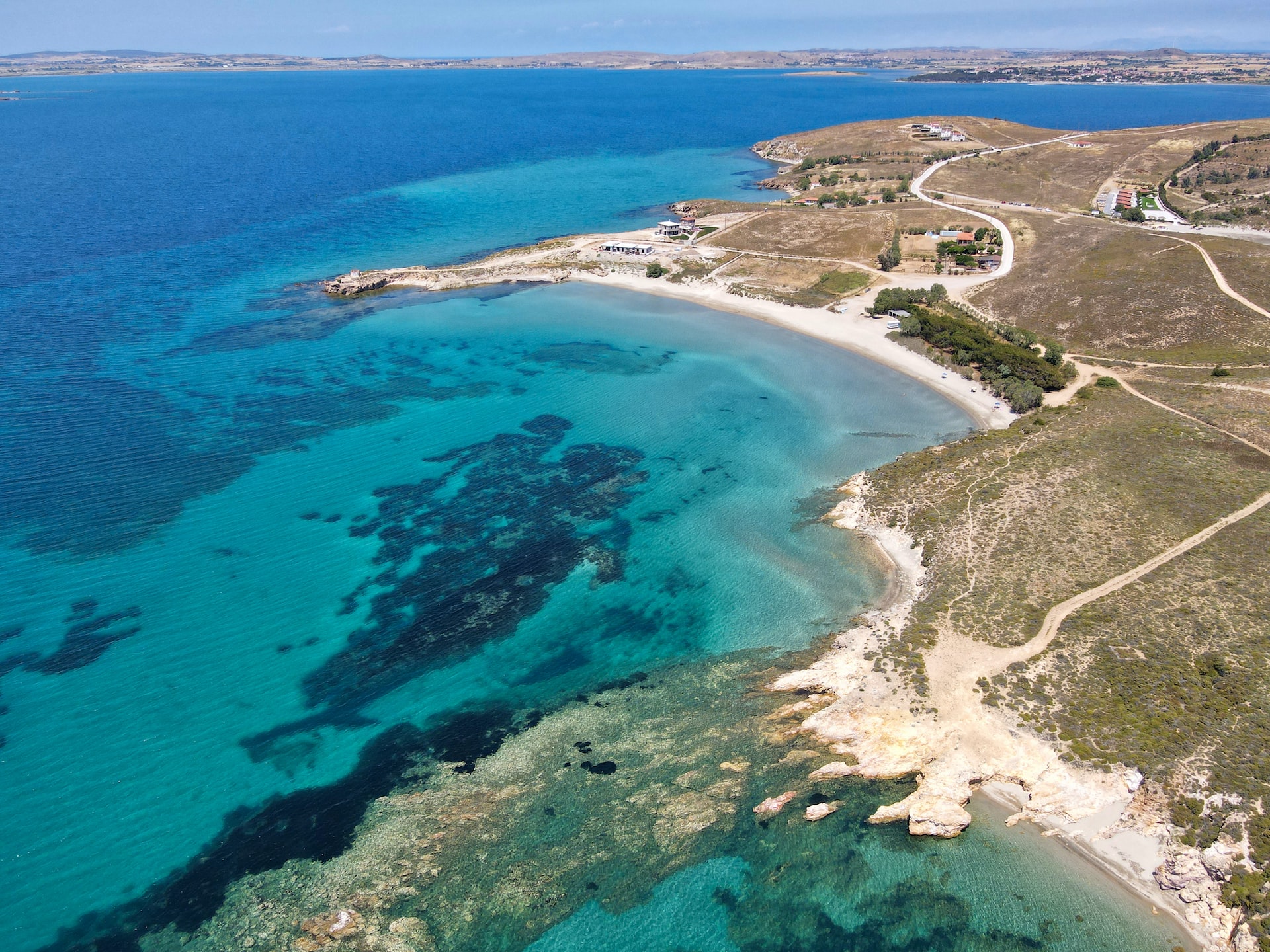
Summer is the ultimate peak season in Greece. The sun is everywhere, the sea is at its warmest, and the islands buzz with life. Temperatures climb between 30 and 33 °C (86 to 91 °F), with peaks above 35 °C inland.
Along the coast, temperatures stay slightly more bearable thanks to sea breezes. The sea is warm (23 to 26 °C / 73 to 79 °F) and the days are long and sunny. An ideal time for swimming, water sports and island hopping.
This season is perfect for:
- Long beach days in Mykonos, Milos or Elafonissi
- Snorkelling and diving with excellent visibility
- Sailing trips through the Cyclades or the Saronic Gulf
- The lively nightlife in Mykonos, Ios or Paros
On the flip side, tourist crowds peak in July and August. Popular spots like Santorini, Mykonos or Oia get extremely busy, and prices rise sharply. The Meltemi wind also blows strongly in the Aegean, which can be tricky for less experienced sailors.
⚓ Important: book your berths and boats well in advance, especially in the Cyclades. The most popular marinas fill up months ahead.
👉 Ideal for: beach, island hopping, summer vibes.
September to October: the Best Time to Visit Greece ⭐
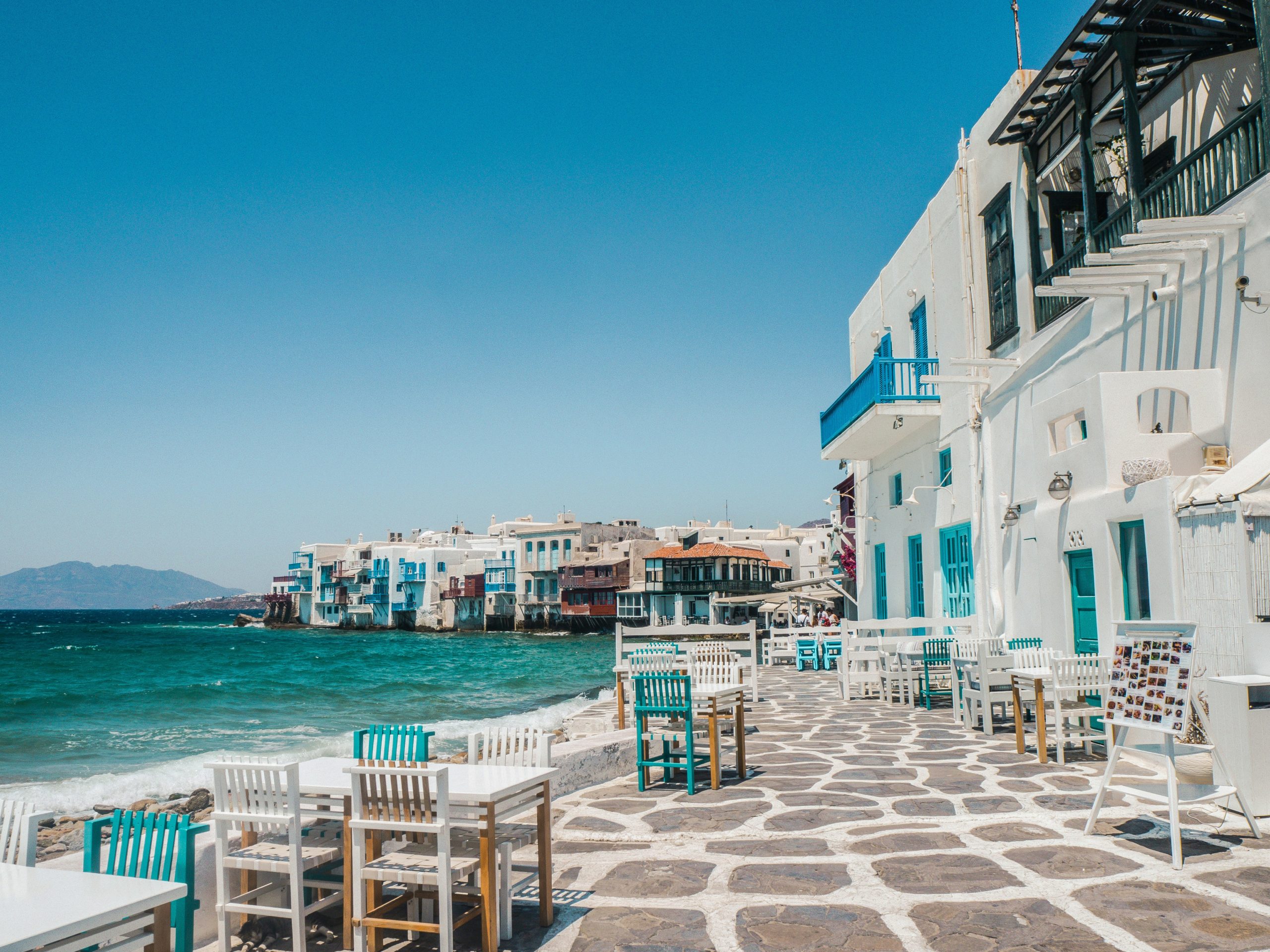
If we had to pick one ideal season for Greece, September and October would be the clear winners. The sea is still warm (22 to 25 °C / 72 to 77 °F), temperatures remain very pleasant (24 to 29 °C / 75 to 84 °F), and the Meltemi winds calm down considerably.
Conditions are optimal for:
- Sailing on gentler seas with steady breezes
- Snorkelling and diving with maximum visibility
- Quieter beaches and coves
- Wine harvest season on Santorini and Crete
- Often softer prices on boats and accommodation
This season is often called the “Greek Indian summer”. It blends warm weather with the authentic charm of islands finding their calm again. It’s also harvest time: don’t miss the famous Assyrtiko wine from Santorini or the freshly pressed olive oil from Crete.
👉 Ideal for: sailing, diving, the perfect balance between weather and crowds.
November to March: the Off-Season ❄️
Winter in Greece is mild compared to mainland Europe, with coastal temperatures ranging from 13 to 18 °C (55 to 64 °F). The sea is noticeably cooler and most water sports are limited. Many island businesses also close down for the winter.
This season is great for:
- Discovering archaeological sites and museums without the crowds
- Exploring Athens, Thessaloniki and the mainland cities
- Joining traditional festivals like Greek Carnival (Apokries)
- Skiing in the mountains of Northern Greece
- Enjoying Greek cuisine and tavernas at their most authentic
Sailing is possible on milder days, mainly in the Ionian Sea and around Crete. However, weather can be unpredictable, and only experienced crews should head out.
👉 Ideal for: cultural travel, gastronomy, complete tranquillity.
Practical Tips for Planning Your Trip to Greece 🧳
- ✈️ Aim for Tuesday or Wednesday flights to save up to 30%.
- 🚢 Use the ferry network to explore multiple islands, but check schedules carefully.
- 🧥 Pack a light jacket for windy evenings, especially in the Cyclades.
- 🥗 Try moussaka, souvlaki, fresh feta and Greek salad for an authentic taste of Greece.
- ⛵ Book your boat from February to secure the best rates in peak season.
FAQ
When is the best time to visit Greece?
May to October, with September standing out: warm sea, ideal weather and fading crowds.
Can you visit Greece all year round?
Yes, but most islands shut down from November to March. Athens, Crete and Rhodes stay open year-round.
When is the best time for the beach?
June to September. September offers the best balance of warm water and moderate crowds.
Should you avoid July and August?
Not necessarily, but expect intense heat, big crowds and high prices. Renting a boat is the best workaround.
When is the best time to snorkel in Greece?
May to October, with peak visibility from June to September.
When is the best time to sail in Greece?
May, June and September. Calmer seas, less Meltemi wind and less crowded marinas.
Which Greek islands are a must-visit?
Santorini and Mykonos for icons, Crete for diversity, Corfu for greenery, Milos for beaches, and Hydra for charm.
When is the quietest time in Greece?
November to March for total quiet. May and October for the best compromise.