Share the post "How to Moor a Boat: The Complete Guide"
Mooring is an essential skill in recreational boating. Whether you are on a sailboat, catamaran, or motorboat, knowing how to moor a boat means safety. It ensures comfort and respect for the fragile marine environment. But how do you choose the right anchor? What chain length should you strictly use? What are the basic rules for a highly successful mooring? Here is a complete guide to boat mooring before your next sailing trip.
What is mooring?
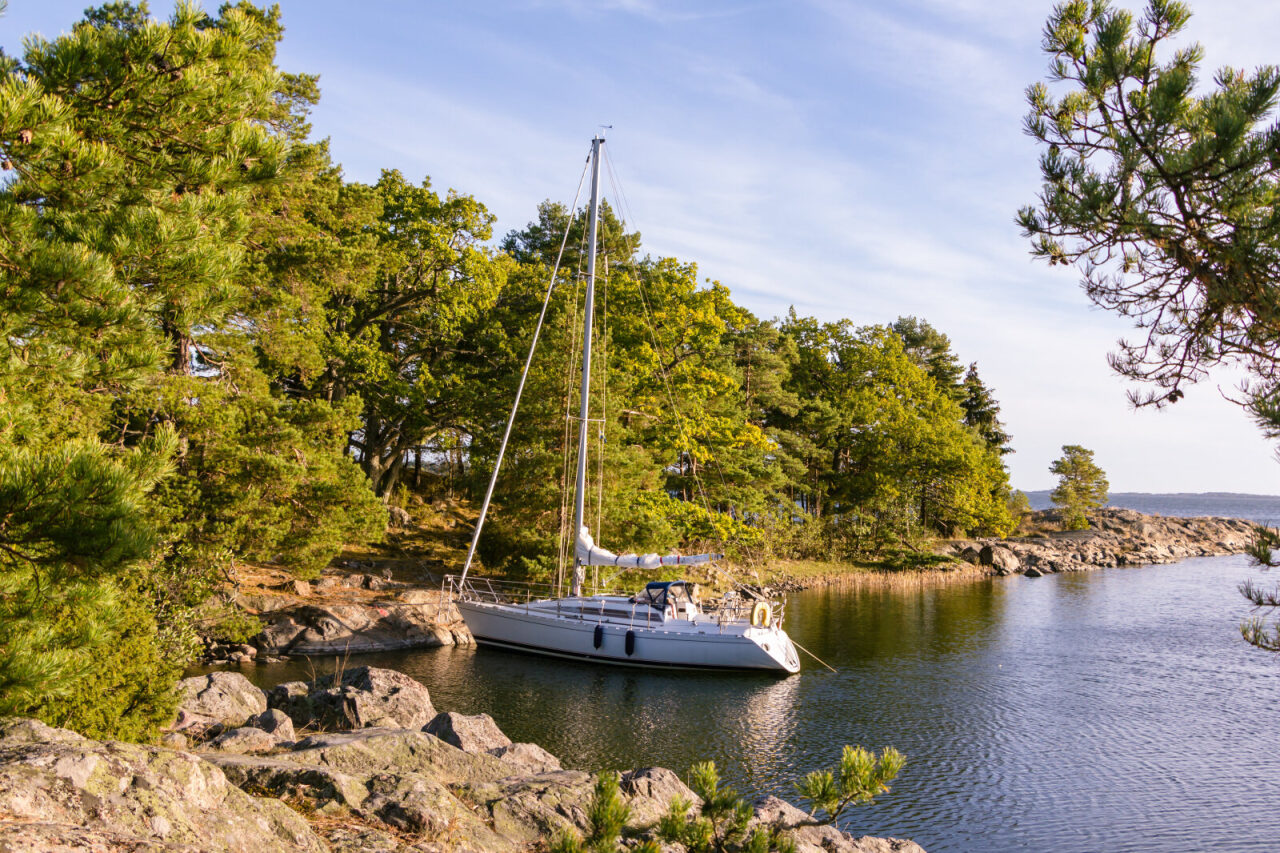
Mooring is the action of holding your boat in place. You use an anchor, a heavy chain, and often a rope. The ultimate goal is to stabilize your vessel without drifting. You might moor for a quick swim or an overnight stay. There are generally two main types of moorings. Temporary mooring is used for a few hours in good weather. Permanent mooring holds the boat long-term, like a mooring buoy.
Choosing the right anchor
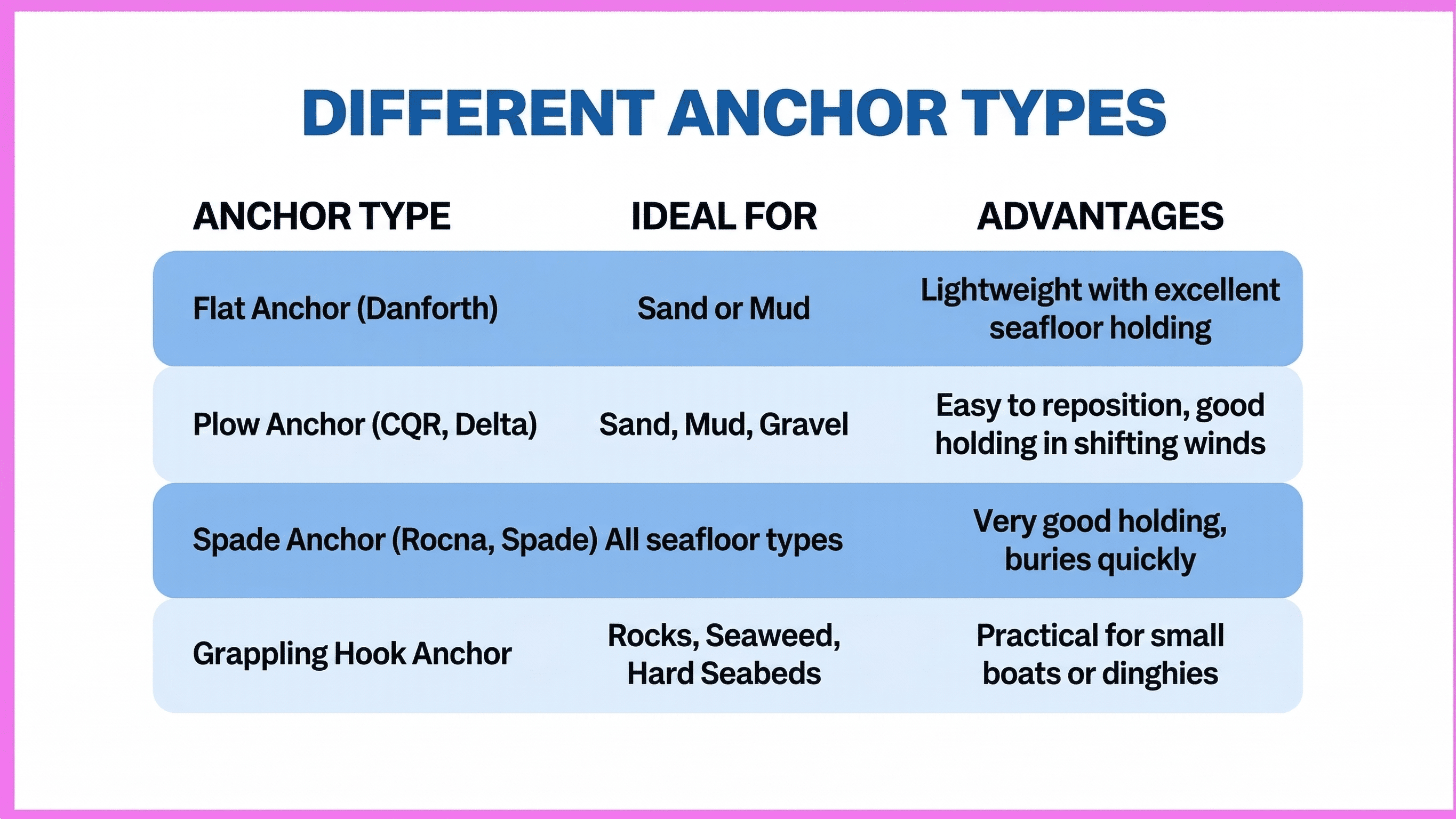
There is no single universal anchor for all sea conditions. The right choice depends on the seabed, boat, and weather. Look at our summary table for the main anchor types. It will help you choose the ideal anchor for the bottom.
Click&Boat Tip: If you rent a boat with a skipper, observe their technique. It is an excellent way to learn proper mooring gestures in real conditions.
What chain length is needed?
The required chain length depends on water depth and weather. This is called the mooring scope. It is the ratio between the line length and water depth. In calm weather, use three to five times the depth. In strong winds, use five to seven times the depth. For example, mooring in five meters of water with 15 knots of wind? You should let out at least 25 to 30 meters of chain.
How to moor a boat: 5 Essential Techniques
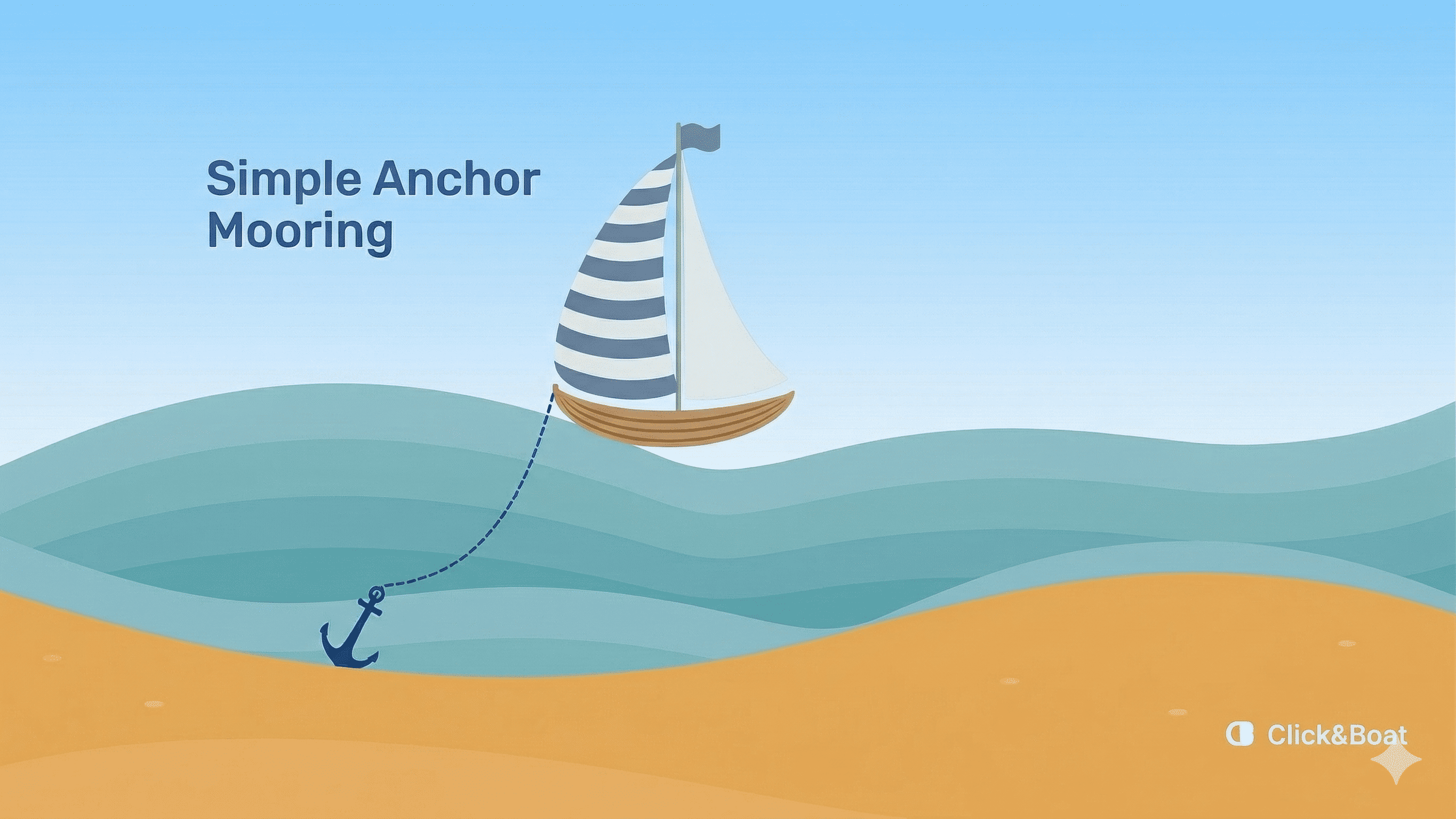
1. The Basics: Simple anchor Mooring
This is the most common technique used worldwide. Sailors use it 90% of the time in moderate weather. First, position your boat directly facing the wind. Let the anchor drop until it firmly touches the seabed. Reverse slowly while letting out the chain to lay it flat. Once you reach the desired length, secure the chain. Check that the anchor holds properly on the bottom. The boat should naturally face the wind again. Click&Boat Tip: Always take a visual alignment on shore using two fixed landmarks. This helps you quickly check if you are dragging.
2. Forked Mooring: Limiting the swing
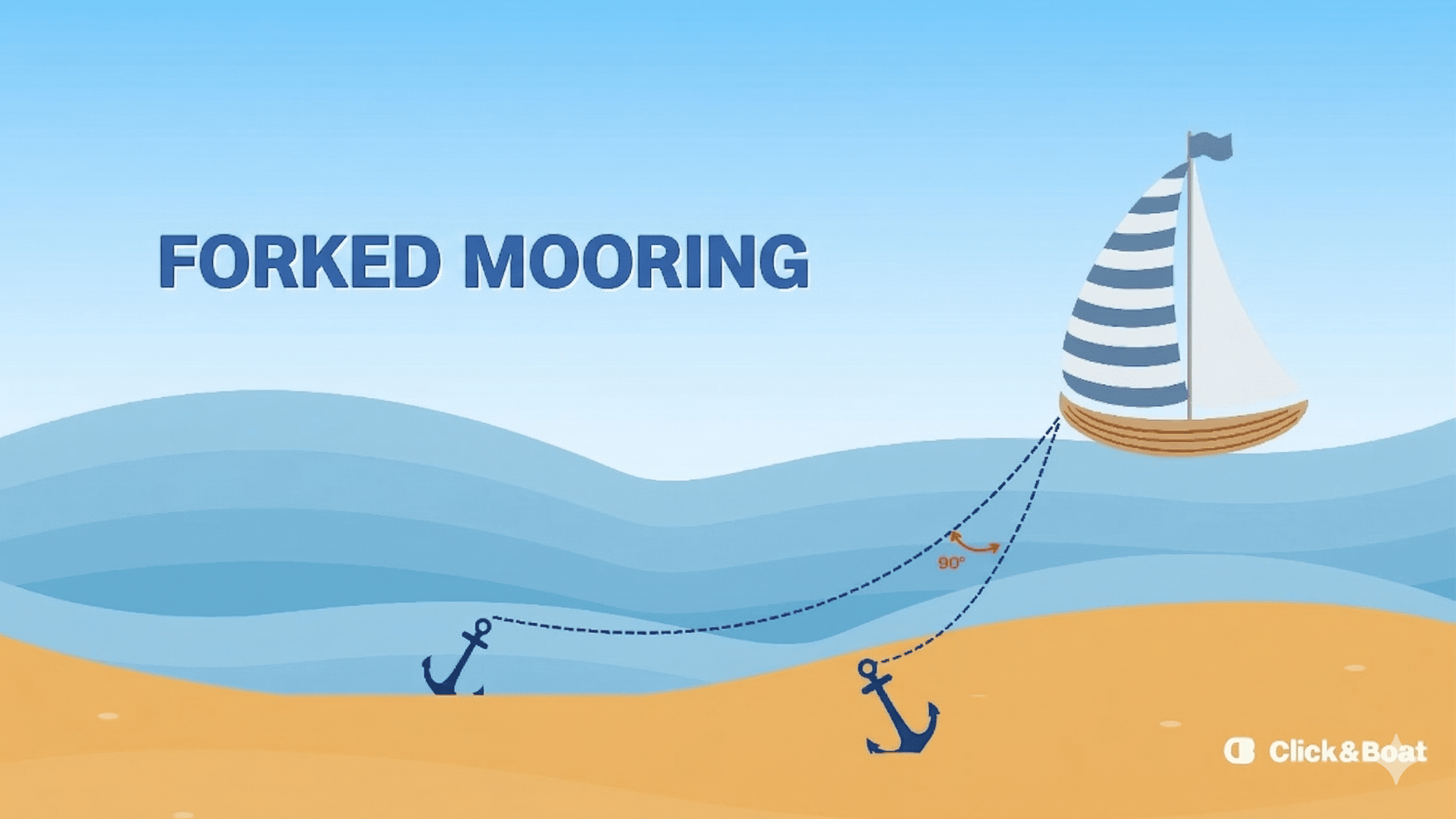
Is the wind unstable or the cove too crowded? Forked mooring is the perfect solution for you. This technique uses two anchors set off the bow. They form a V-shape of about 60 to 90 degrees. This significantly reduces the boat’s swinging circle. It also ensures a better hold if the wind shifts. Drop the first anchor and let out chain while moving sideways. Then drop the second anchor. Finally, reverse to tension both lines equally.
3. Tandem Anchoring: Heavy weather safety
Tandem mooring involves attaching a second, smaller anchor. You place it ahead of the main anchor on the same line. Use this when the wind blows strong or the seabed is poor. The first anchor keeps the second anchor’s shank flat. This greatly increases the overall holding power. Note that retrieving this setup is much more technical. You often need a tripping line to help lift it safely.
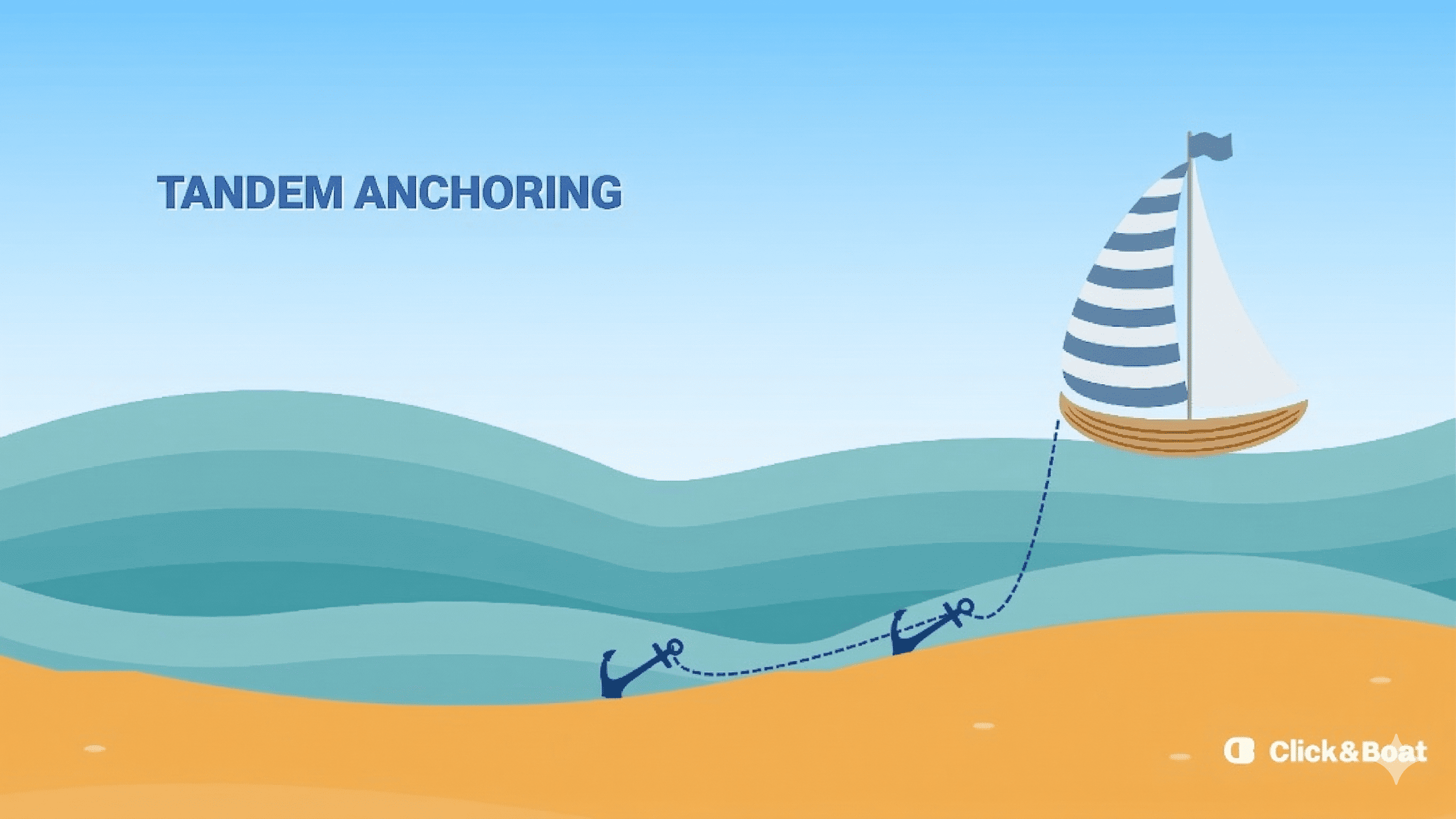
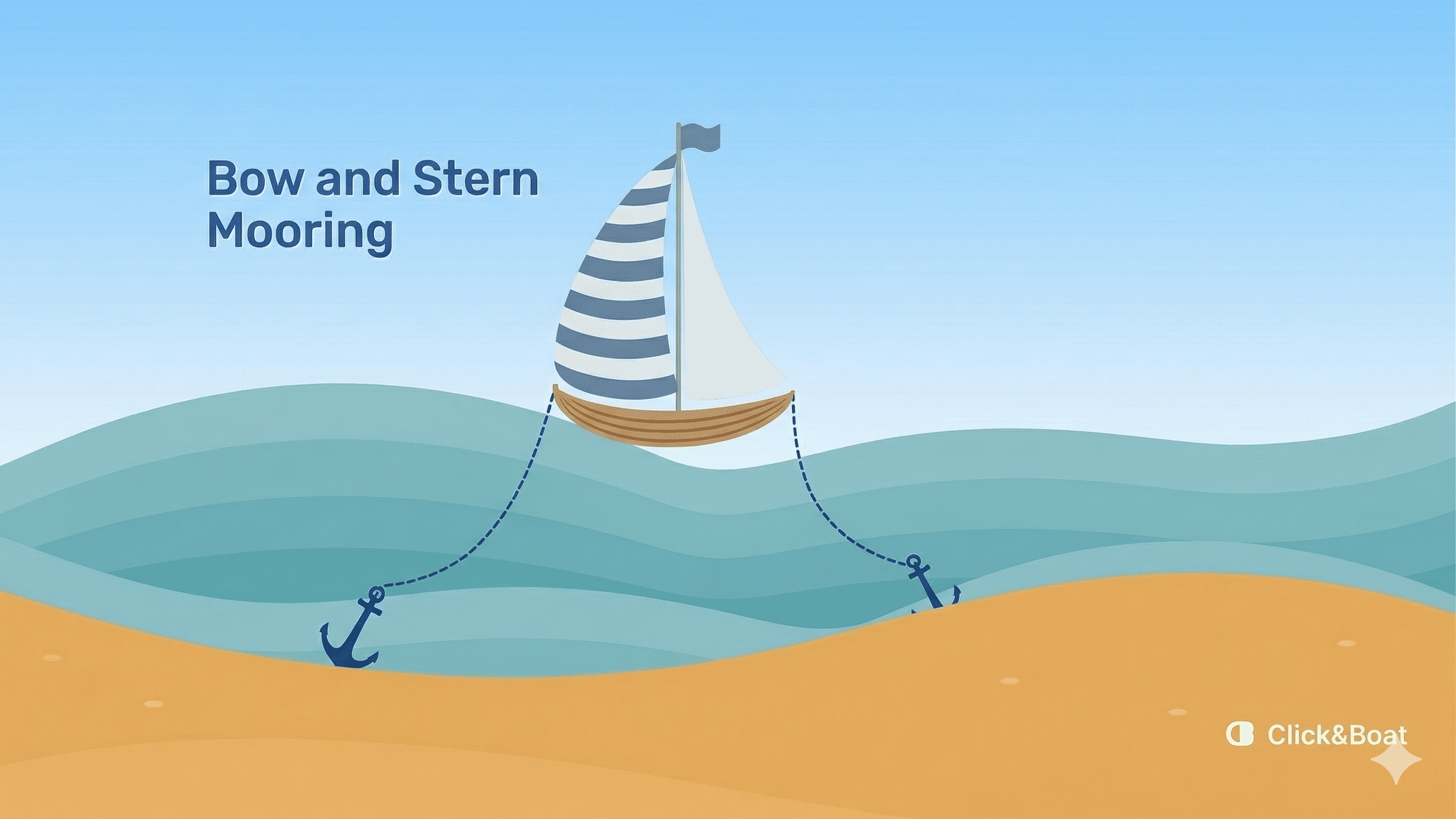
4. Bow and Stern Mooring: Absolute comfort
Are you tired of rolling side to side in the swell? Bow and stern mooring is your best friend. You set one anchor at the bow and another at the stern. You can also use a stern line tied to shore. This keeps the boat in a fixed, stable position. You can point the bow directly into the swell to stop rolling. It is also very useful in narrow rivers to avoid blocking traffic.
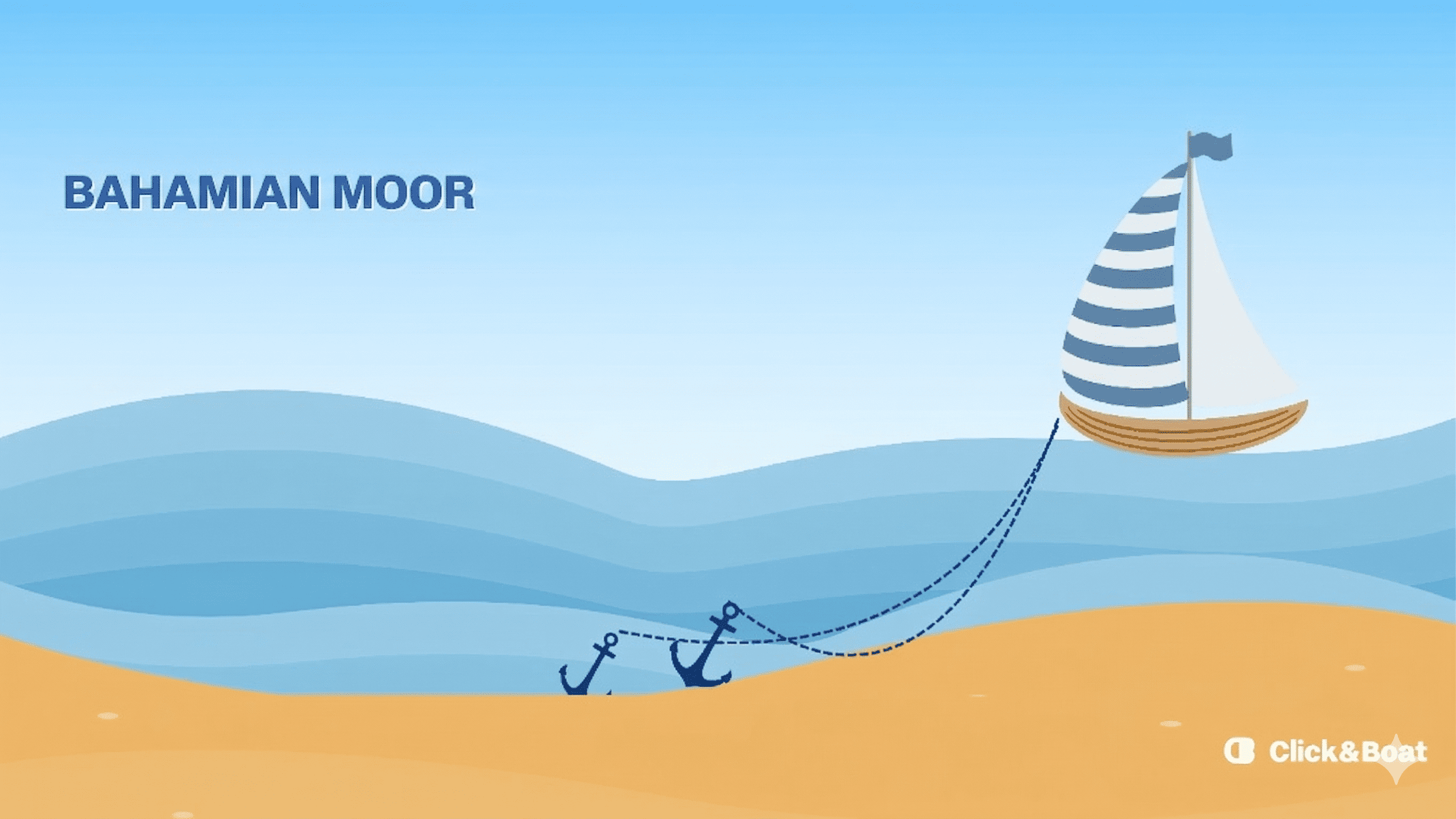
5. Bahamian Moor: For strong gales
This is a very robust variation for tough weather conditions. Two mooring lines run from the bow to two widely separated anchors. Unlike forked mooring, these lines are exceptionally long. The goal is to create maximum resistance against a very strong wind. Ships often use this setup to ride out a storm safely.
Best mooring practices
A good mooring must also be a responsible one. Many marine areas are fragile, like Posidonia seagrass in the Mediterranean. Always favor sandy areas or designated mooring zones. Check local regulations before dropping your heavy anchor. Avoid mooring on seagrass or delicate coral reefs. Do not let your chain drag unnecessarily on the sea bottom.
Common mistakes to avoid ⚠️
Mooring is not always easy, and mistakes happen frequently. Avoid mooring too close to another boat or a swimming area. Do not let out too little chain, or your boat will drag. Never forget to factor in the local tides. Always check your mooring point regularly. Pay attention to these details to stay safe and respect others!
Now you have all the information for a successful mooring. Click&Boat allows you to experience safe sailing worldwide. You can easily rent a boat with or without a skipper. Before leaving, learn about authorized mooring zones and local weather. Your skipper or the boat owner will gladly advise you.
FAQ
What is boat mooring?
Mooring means holding a boat in place with an anchor and chain. This effectively stabilizes the vessel without drifting.
Which anchor should I choose?
Danforth is ideal for sand or mud. Delta adapts to various seabeds. Rocna offers excellent holding power everywhere. Grapnel is practical for small boats.
What chain length do I need?
In calm weather, use 3 to 5 times the depth. In strong winds, plan for 5 to 7 times the depth.
What mistakes should I avoid?
Avoid mooring too close to others or swimming areas. Never let out too little chain. Always remember the tides.
How do I know if my anchor is dragging?
Take two aligned landmarks on shore. If the alignment changes, you are moving! At night, use a GPS anchor alarm.
What is a tripping line?
A tripping line connects the anchor head to a surface buoy. It helps locate your anchor and frees it if stuck.