Share the post "What’s a sailboat mast? All you need to know!"
Summarize this post with:
If you are an avid sailor, you will understand the importance of knowing about the different parts of a sailboat. There are few things as fundamental as the sailboat mast. Rising tall from the deck, the mast is an important structure that harmonises the wind and water to propel the vessel forward. In this blog post, we will explore the different components of a sailboat mast and dive into the fascinating world of single mast rigs and multi-mast rigs, each offering a unique sailing experience.
At Click&Boat, we like to keep you up to date with all things sailing. Read on to find out more about the different parts and uses of the mighty sailboat mast!
What is a sailboat mast?
At its core, a sailboat mast is a vertical pole that extends upward from the deck of the boat. It plays an important role in supporting the sails and maintaining their shape to maximise the use of wind. The material used to make sailboat masts is typically aluminium, carbon fibre, or wood, with each material offering its own unique benefits.
What are the different parts of a sailboat mast?
A sailboat mast consists of several integral parts:
Base and Step: The mast is securely fixed to the boat’s deck using a base and step, which provide stability and distribute the forces exerted by the sails.
Masthead: Located at the very top of the mast, the masthead is an attachment point for various rigging elements, such as halyards and stays.
Spreaders: These are horizontal bars extending from the mast, which help to keep the shrouds (supporting cables) away from the mast, providing better support for the rig.
Boom: The boom is a horizontal spar that extends from the bottom of the mast, holding the foot of the mainsail and controlling its angle.
Now that we have an overview of the sailboat mast, let’s delve into the two primary types of sailboat rigs: single-mast rigs and multi-mast rigs.
Single – mast rigs
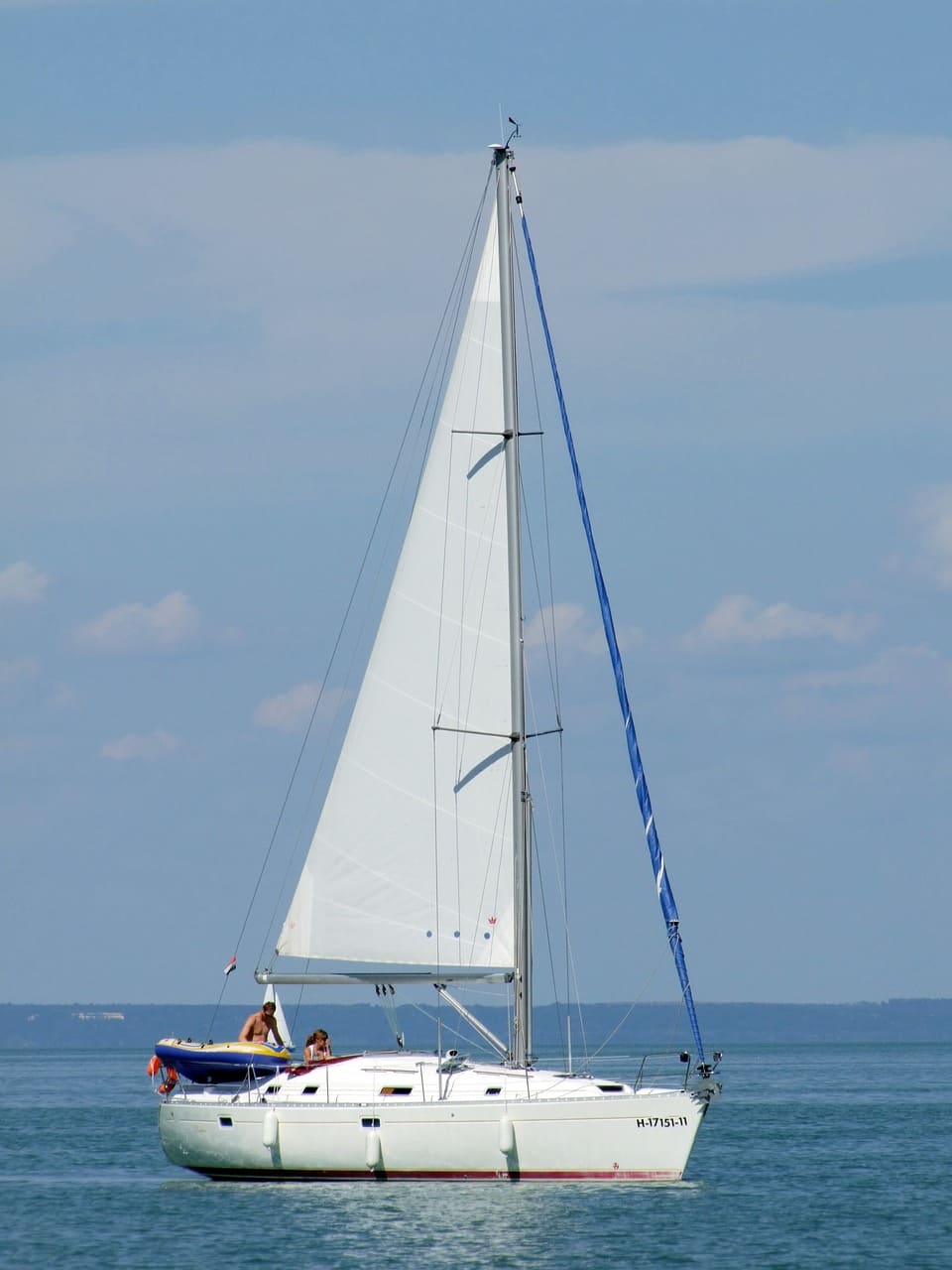
There are 3 different types of single mast rigs: Sloop – Rigged Mast, Cutter Mast and Catboat Mast.
Sloop – Rigged Mast
The sloop rig is one of the most common and simple configurations for a single mast sailboat. It features a single mast with two sails – a mainsail and a foresail (jib or genoa). Attached to the boom is the mainsail. The foresail secures to the forestay at the bow and a headsail furler, allowing for easy reefing and unfurling.
Cutter Mast
The cutter rig is a variation of the sloop rig, with an additional smaller headsail, known as the staysail. This configuration provides more sail area options, offering increased versatility and better performance in varying wind conditions. The staysail is set between the forestay and an inner forestay, creating a more balanced sail plan.
Catboat Mast
The catboat rig is a unique single mast configuration that features a single, large mainsail with no headsail. This makes it easy to handle, especially for beginners. The lack of a headsail makes the catboat less efficient for upwind sailing, but ideal for downwind and reaching courses.
Multi – Mast rig
There are 3 different types of Multi – Mast rigs: Yawl Masts, Ketch Masts, and Schooner Masts.

Yawl Masts
The yawl rig has two masts – a taller main mast and also a shorter mizzen mast, located forward of the rudder post. The mizzen mast helps improve balance and control, making it easier to handle in rough seas. The yawl rig allows for a diverse range of sail combinations, enhancing the sailboat’s adaptability.
Ketch Masts
The ketch rig features two masts, but with the mizzen mast positioned aft of the rudder post. This configuration offers better downwind performance and manoeuvrability while sacrificing some upwind efficiency. Ketch rigs are popular for long-distance cruising vessels due to their versatility.
Schooner Masts
The schooner rig has two masts, with the forward mast (foremast) being taller than the aft mast (mainmast). Schooners often feature multiple foresails and square topsails on their masts, providing an extensive sail area for excellent downwind performance.
Sailboat mast maintenance tips
A mast may look solid, but it needs regular checks to stay safe. Inspect the mast step, masthead and spreaders at least once a season. Look for cracks, corrosion, loose bolts or bent fittings. Check shrouds and stays for broken wire strands and make sure turnbuckles are not seized. Blocks, sheaves and halyards should run smoothly without unusual noise. If your mast is wooden, watch for soft spots or peeling varnish. For aluminium and carbon masts, rinse with fresh water after sailing in salt water. When in doubt, ask a rigger to do a full inspection before a long trip.
For any sailor, understanding the sailboat mast and its various configurations is essential for navigating the waters with confidence. The sailboat mast stands as an excellent example of engineering. It symbolizes the very essence of sailing – the harmonious dance between the wind, water, and the spirit of adventure. Next time you set sail, take a moment to appreciate the sailboat mast. The sturdy backbone that carries you on your nautical journey. Happy sailing!
FAQ
It holds the sails up and keeps their shape so the wind can drive the boat forward.
Aluminium is common and strong, carbon fibre is lighter and used on performance boats, and wood has a classic look but needs more care.
Do a quick visual check before each season and a detailed inspection at least once a year.
On small boats it is sometimes possible, but on larger yachts it is safer to use a yard or professional rigger.
Cracks, corrosion, losse fittings, frayed wires, stiff halyards or unusual noises under load are all warning signs.