Share the post "What is a Catamaran? The World of Twin-Hulled Boats"
Welcome aboard our nautical adventure as we look into what a catamaran is. If you’ve ever been interested in these twin-hulled vessels and wondered what sets them apart from other boats, you’re in the right place! In this post, we’ll explore their unique features and why they’re becoming an increasingly popular choice among sailors. We’ll also touch on the environmental benefits of chartering one, the science behind their stability. Lastly, we’ll provide you with a calendar of must-attend regattas and festivals. With summer approaching and boats ready to book with Click&Boat, let’s set sail and explore the world of twin-hulled boats!
What is a catamaran?
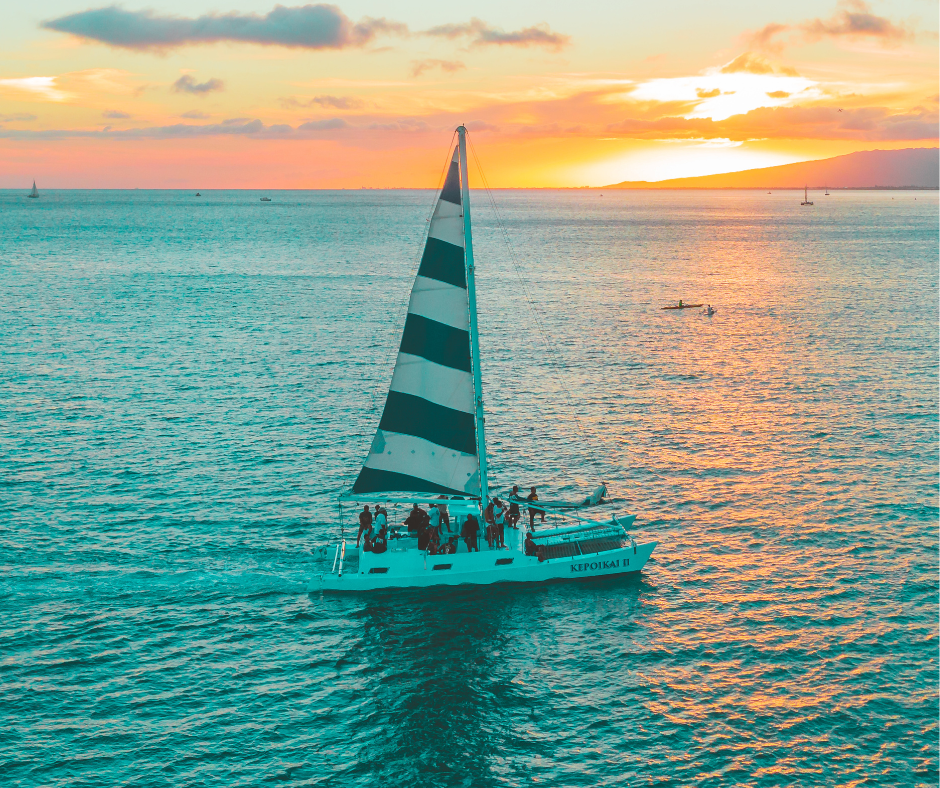
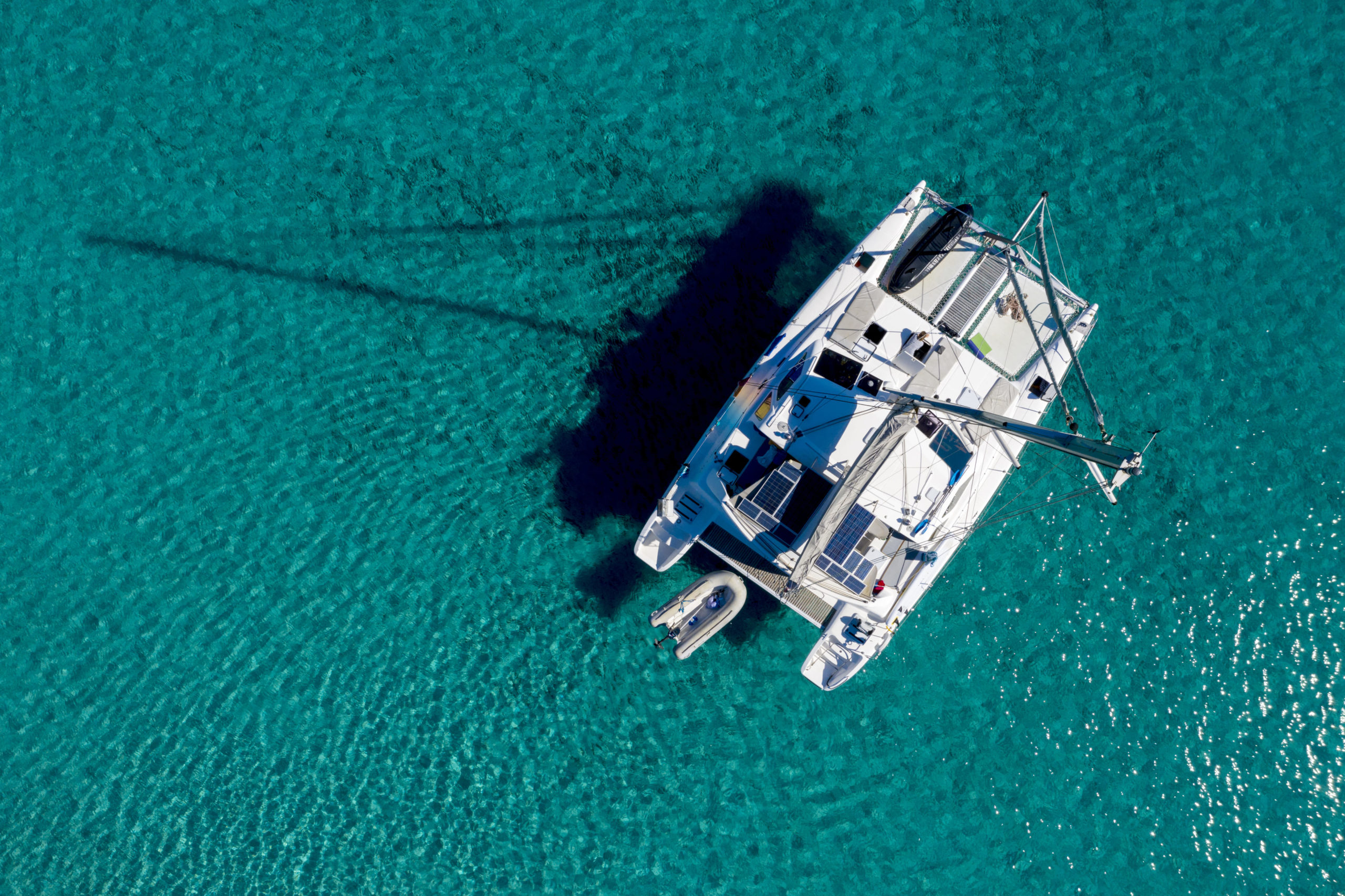
It is a type of multi-hulled boat, with two parallel hulls of equal size, also known as pontoon boats. This unique double-hulled design originated from traditional fishing boats and sailing vessels in the South Pacific and offers a range of benefits for sailors. They are available in various sizes and can be powered by sails or engines, making them extremely versatile.
Different types of catamarans
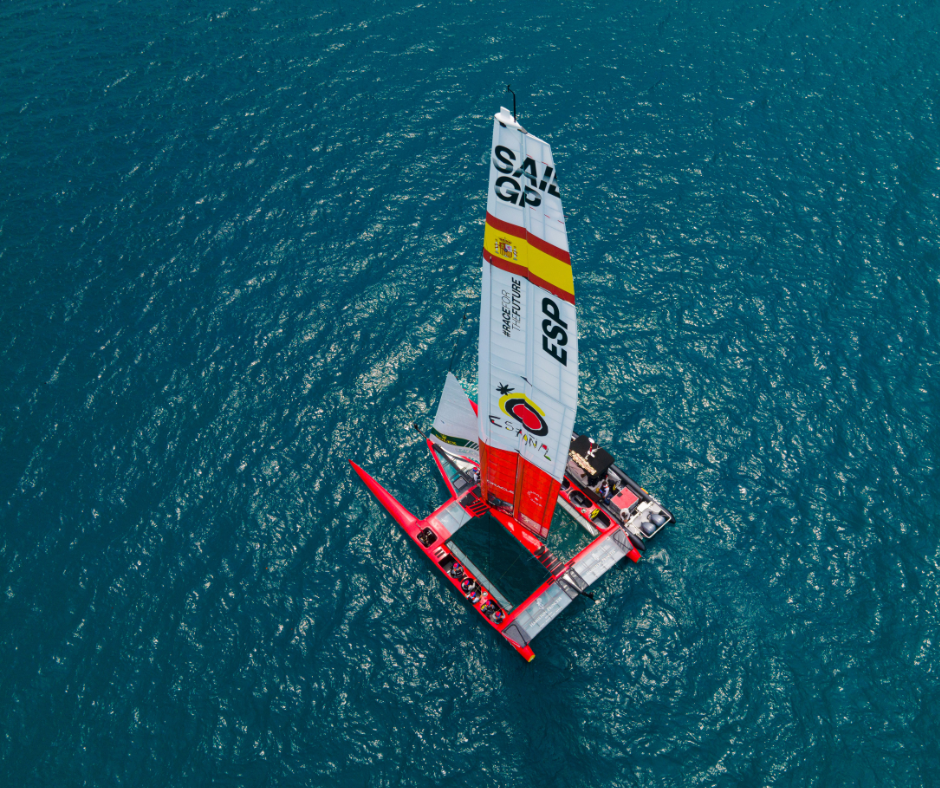
Catamarans come in different shapes and sizes, each offering unique features and benefits. Cruising catamarans are designed for leisurely sailing, with spacious cabins and amenities. Racing catamarans, are built for speed and performance, with lightweight construction and streamlined design. Power catamarans are perfect for those who want the speed of a motorboat with the stability of a catamaran. Finally, ferry catamarans are larger vessels designed for commercial use, with the ability to carry passengers and vehicles.
Catamaran vs. Monohull: The Great Sailing Debate
The debate between catamarans and monohulls is popular in the sailing community, with both types of vessels offering unique advantages and disadvantages. Let’s explore some of the key differences between these sailing boats.
- Speed: Generally, they have a speed advantage over Monohulls. This is thanks to their reduced water resistance and lighter construction. The top speeds can be up to 60 knots. This power of catamarans is particularly appealing for those interested in racing or covering long distances quickly.
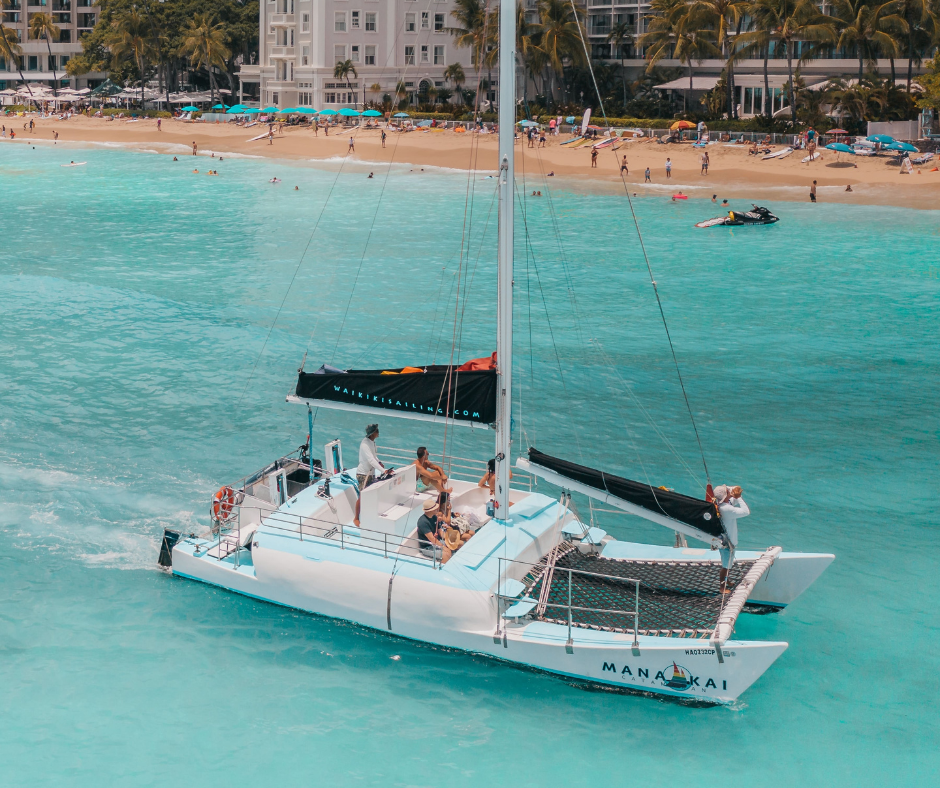
- Space and comfort: Typically they provide more living space and bridge deck than Monohulls. This makes them an attractive choice for families, groups, or long-term cruisers who value comfort and room for onboard activities. Monohulls, while more compact, can still be cosy and offer a more intimate sailing experience.
- Draft and access: They have a shallower draft than Monohulls, allowing them to navigate and anchor in more shallow waters. This can open up a wider range of cruising destinations and reduce the risk of damaging sensitive marine habitats. Monohulls, on the other hand, are limited to deeper waters and marinas.
- Manoeuvrability: Many sailing enthusiasts consider Monohulls easier to steer than catamarans, particularly in tight spaces or crowded marinas. Catamarans, while still agile, require more skill and practice to steer confidently.
- Maintenance and costs: Catamarans are more expensive to purchase and maintain due to their larger size and the need for two engines or sets of sails. Monohulls, while potentially cheaper, can still be expensive depending on their age, condition, and equipment.
- Sailing characteristics: Monohulls offer a more traditional sailing experience, with the boat heeling and responding more dramatically to wind and waves. This can be exhilarating for some sailors, while others may prefer the more level, stable ride of a catamaran.
The Science of Catamaran Stability
The stability is a result of its unique design, which offers several advantages over traditional mono-hulled boats. Let’s explore some of these!
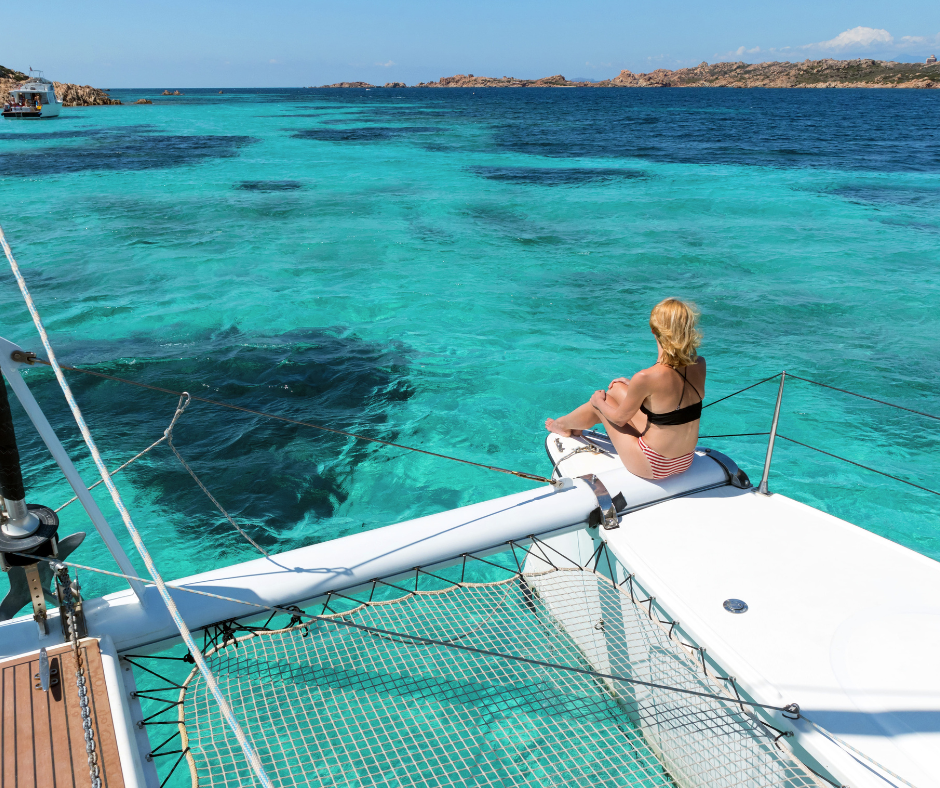
- Wide beam: This is the distance between its two hulls, provides a stable platform that resists rolling and heeling (tipping) when underway. This means that catamarans are less likely to capsize and provide a smoother ride for passengers in rough conditions.
- Distribution of weight: The twin-hull design allows for a more even distribution of weight across the vessel. This reduces the boat’s centre of gravity and makes it more resistant to capsizing, especially in comparison to mono-hulled boats with a narrower hull and a higher centre of gravity.
- Buoyancy and displacement: Each hull has its own buoyancy and displacement, which contributes to the vessel’s overall stability. This means that even if one hull were to become compromised, the other hull would still provide sufficient buoyancy to keep the boat afloat.
- Damping effect: The wide beam of a catamaran also provides a damping effect on the motion of the boat. This means that when the boat encounters waves or wakes, the movement is less abrupt and more gradual, resulting in a smoother and more comfortable ride for passengers.
The environmental benefits of sailing a catamaran
Calling all eco-conscious sailors! Did you know that catamarans are not only fast and comfortable, but also offer numerous environmental advantages? Here’s why these boats are becoming more popular among sailing enthusiasts.
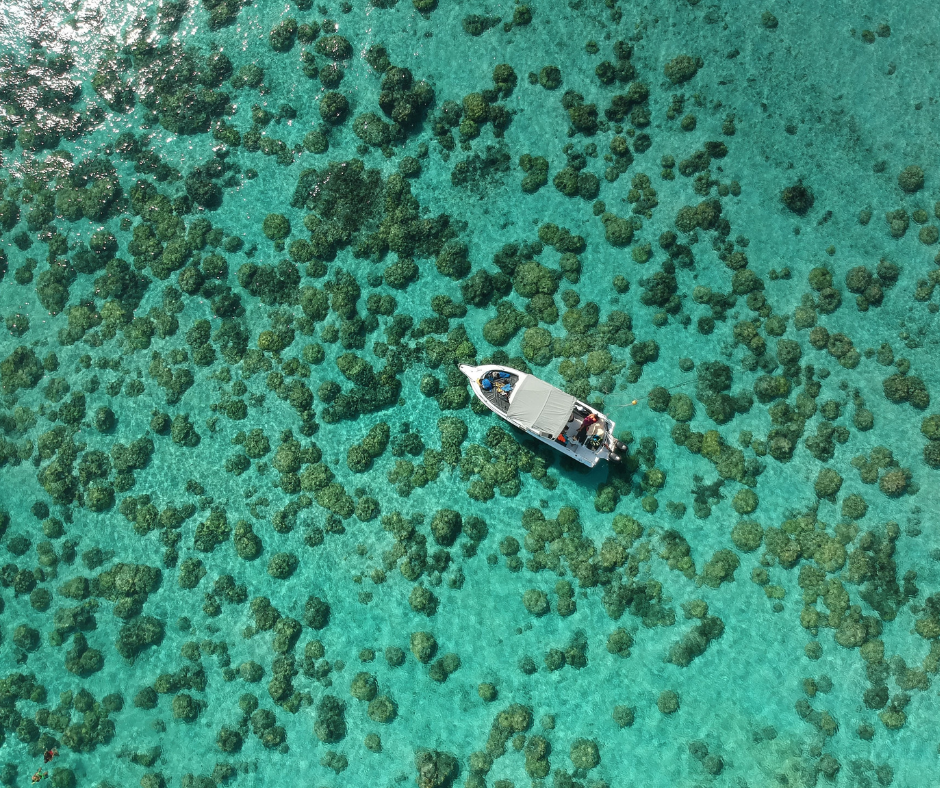
The boat design translates to less water resistance and energy consumption, making them a greener choice for those mindful of their carbon footprint. Their shallow draft allows you to navigate shallow waters without harming marine habitats like coral reefs and seagrass beds, with minimal environmental impact. Modern boats often accommodate solar panels and wind generators, allowing you to harness clean, renewable energy for guilt-free sailing. Some manufacturers are also turning to sustainable, recyclable materials to lessen the environmental impact of boat production. Click&Boat offers various eco-friendly options for those who prefer more sustainable sailing.
Catamaran Regattas and Festivals: A Calendar of Must-Attend Events 2023
It’s time to finish with a list of the must-attend events of 2023! Here are our top recommendations.
Les Voiles de St Barth’s Richard Mille 16-22 April
With 1,200 sailing enthusiasts and 63 boats, this race takes place over 5 days on difficult coastal routes in the town of Gustavia.
Giorgio Armani Superyacht Regatta 6-10 June
If you are looking for a more glamorous event, this is the one for you. This prestigious event takes place over 4 days off the coast of Sardinia.
Round Texel Race 10 June
This Dutch event is the world’s largest catamaran race, with hundreds of competitors sailing around the island of Texel in the North Sea.
Cannes Yachting Festival 12-17 September
This event is a must-attend for both yachting enthusiasts in Cannes. This show will be one of the top yacht exhibitions in Europe, drawing in around 700 boats annually, including luxury catamarans.
So now that you’re up to speed on everything catamaran, it’s time to set sail into the sunset!