Share the post "Bareboat vs Skippered Charter: How to Choose the Right One?"
Planning a sailing holiday and hesitating between a bareboat and a skippered charter? Totally normal. On Click&Boat, you can book both options in a few clicks – but the experience on board won’t feel the same at all.
This guide walks you through what each option really means, how it changes your holiday, and how to decide what fits your crew, your skills and your budget.
What is a bareboat charter?
On a bareboat charter, you rent the boat without a professional skipper. You (or someone in your crew) are the captain. You decide where to go, when to leave, where to anchor and how long to stay. You also take responsibility for safety, manoeuvres, navigation and keeping an eye on the weather.
Most destinations require at least:
- A recognised boating licence (ICC, RYA, ASA or local equivalent, depending on the country).
- Some recent experience on a similar size and type of boat.
For exemple, countries like Croatia and Spain have lists of licences they recognize, based on the charterer’s country of origin. We recommend you check out our guide for motorboats!
The big advantage is freedom. You can change plans at the last minute, stay longer in a bay you love, or sail a bit further if the mood takes you. It’s usually the most budget-friendly option too, since you’re not paying a daily skipper fee and you don’t need to reserve a cabin for them.
But bareboat also means more work. You’re the one docking the boat in a crowded marina on a windy afternoon, deciding whether that thunderstorm on the horizon is close enough to worry about, and waking up at 3 a.m. if you want to re-check that the anchor is holding. For many sailors, that’s part of the fun. For others, it can feel stressful. Especially if you’re trying to relax on holiday with family or friends who don’t sail.
What is a skippered charter?
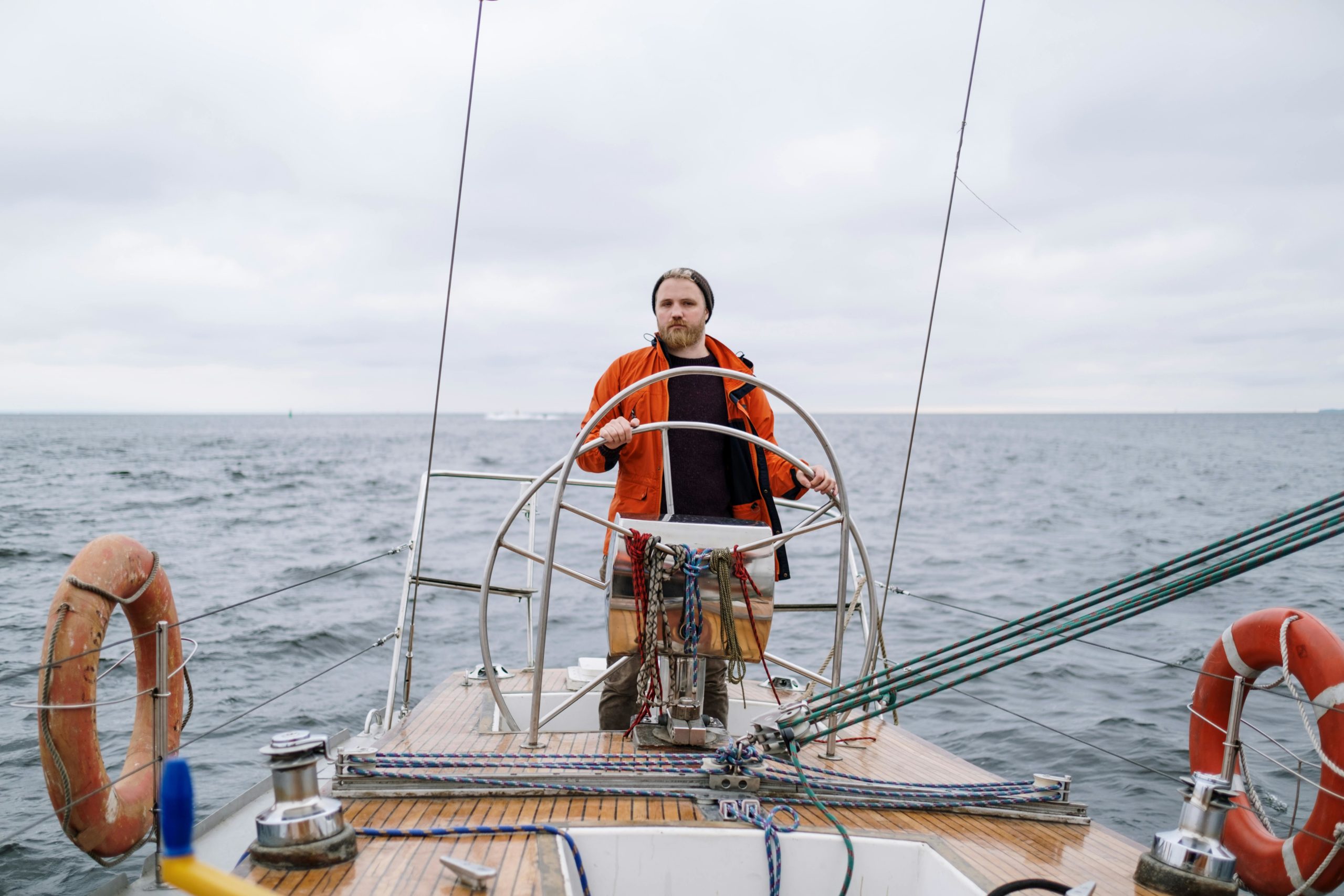
On a skippered charter, you rent the boat with a professional captain on board. They are legally responsible for the vessel and the people on it. They handle the tricky bits: docking, anchoring, route planning, reading the forecast and keeping everyone safe.
You don’t need a licence, and you can be completely new to sailing. You can treat the boat like a floating villa: relax, swim, enjoy the view and jump in to help with lines only if you feel like it. At the same time, nothing stops you from taking the helm; most skippers are happy to let you steer and to explain what they’re doing.
The trade-off is cost and privacy. You pay a daily skipper fee (often in the range of €150–€250 per day depending on destination and boat) and you need to count them as one person when choosing the size of your boat, since they’ll sleep on board and eat with you. For many groups, the peace of mind and local knowledge they bring easily justify the extra budget.
Bareboat vs Skippered: what changes in practice?
| Feature | Bareboat charter | Skippered charter |
|---|---|---|
| Licence required | Yes, recognised sailing licence + experience | No licence needed |
| Responsibility | You’re the captain, in charge of boat & crew | Skipper handles safety, navigation and manoeuvres |
| Budget | Lower (no skipper fee) | Higher (daily skipper fee + food & tip) |
| Freedom | Maximum – you choose route & schedule | High, but within what’s safe and realistic |
| Stress level | Higher, especially for first-timers | Lower : you can switch off and enjoy the ride |
| Learning opportunity | You practise as skipper | Hands-on coaching from a pro, if you want |
| Best for | Experienced sailors, small groups on a budget | Beginners, mixed-experience crews, families with children |
How to choose: the right questions to ask
1. What is your real level of experience?
Try to be honest rather than optimistic. If you regularly skipper boats of similar size and have dealt with different conditions (gusty winds, busy marinas, night approaches), bareboat will probably feel natural.
If your last time on a helm was a week-end course several years ago, or if you only sailed small boats in very sheltered waters, starting with a skipper is usually the smarter and safer choice. You can always use the week to refresh your skills and then plan a bareboat charter next time.
2. What kind of holiday does your crew want?
Ask everyone what they imagine when they think “boat holiday”:
- If the answers sound like “lazy mornings, swimming, aperitif at sunset, reading on deck”, a skippered charter is usually a better match.
- If the answers sound more like “learning to sail, doing manoeuvres, moving every day, trying longer crossings”, a bareboat might be perfect.
A nice compromise with a skipper is to say on day one: “We’d love to learn and help.” You still enjoy a relaxed holiday, but you pick up skills along the way.
3. Who’s coming with you?
Families with young children, older relatives or friends who have never sailed often feel safer with a skipper on board. Parents can focus on the kids instead of worrying about mooring lines, and first-timers are reassured by having a pro at the helm.
If you’re a small group of experienced sailors who already know how to work as a crew, bareboat is very rewarding and usually cheaper per person.
4. What is your budget?
Bareboat charters look cheaper at first sight, and they usually are. But compare the overall picture:
- Bareboat: boat rental + fuel + marinas + cleaning + food.
- Skippered: same costs + skipper fee + skipper’s food + tip if you’re happy with their work.
That extra cost buys you less stress, better itineraries (local skippers know where to find the best anchorages and avoid the crowds), and often safer decisions. For a once-in-a-lifetime trip or a special occasion, it can be well worth it.
5. Where are you going?
Some regions are easier than others. Island chains with short hops, predictable winds and plenty of mooring buoys are very friendly for confident bareboat skippers. Areas with strong tides, reefs, narrow channels or quickly changing weather can be more comfortable with a skipper, especially the first time.
If you dream about a specific destination but feel unsure about the conditions, starting with a skippered charter is a great way to discover the area safely.
FAQ
Do I always need a licence to rent a boat?
For bareboat charters, most countries require a recognised licence and some experience. For skippered charters, you don’t need any licence: the skipper is the legal captain.
Is a skippered charter still “private” if there’s a skipper on board?
Yes. You book the whole boat for your group, the skipper just joins as part of the crew. To stay comfortable, choose a boat with one extra cabin so everyone has their own space.
Can I learn to sail during a skippered charter?
Definitely. Many guests treat their skippered week as a mini sailing course. Tell the skipper you’d like to participate and they’ll often let you steer, handle lines and explain charts and weather.
What happens if the weather turns bad on a bareboat charter?
As the skipper, you decide whether to change plans, stay in port or seek shelter. That’s why experience matters. If you’re not confident making those decisions yet, a skippered charter is the safer option.
What’s the simplest way to decide?
If you want maximum comfort, minimal stress and you’re not an active skipper, choose skippered. If you’re experienced, love being at the helm and want full control of your route, go for bareboat. Click&Boat lets you compare boats, talk directly to owners and build the sailing holiday that fits you best.