Share the post "What is the Beam of a boat? Everything you need to know"
When you start looking at boat specs, whether you are buying a vessel or renting one for a holiday on Click&Boat, you are bombarded with nautical terms. Draft, LOA, displacement, and… Beam.
While it might sound like a piece of wood holding up the roof, the “beam” is actually one of the most critical measurements of a ship. It determines not just how much room you have for your sunbathing session, but also how the boat handles the waves and where you can park it.
The simple definition: What is the Beam?
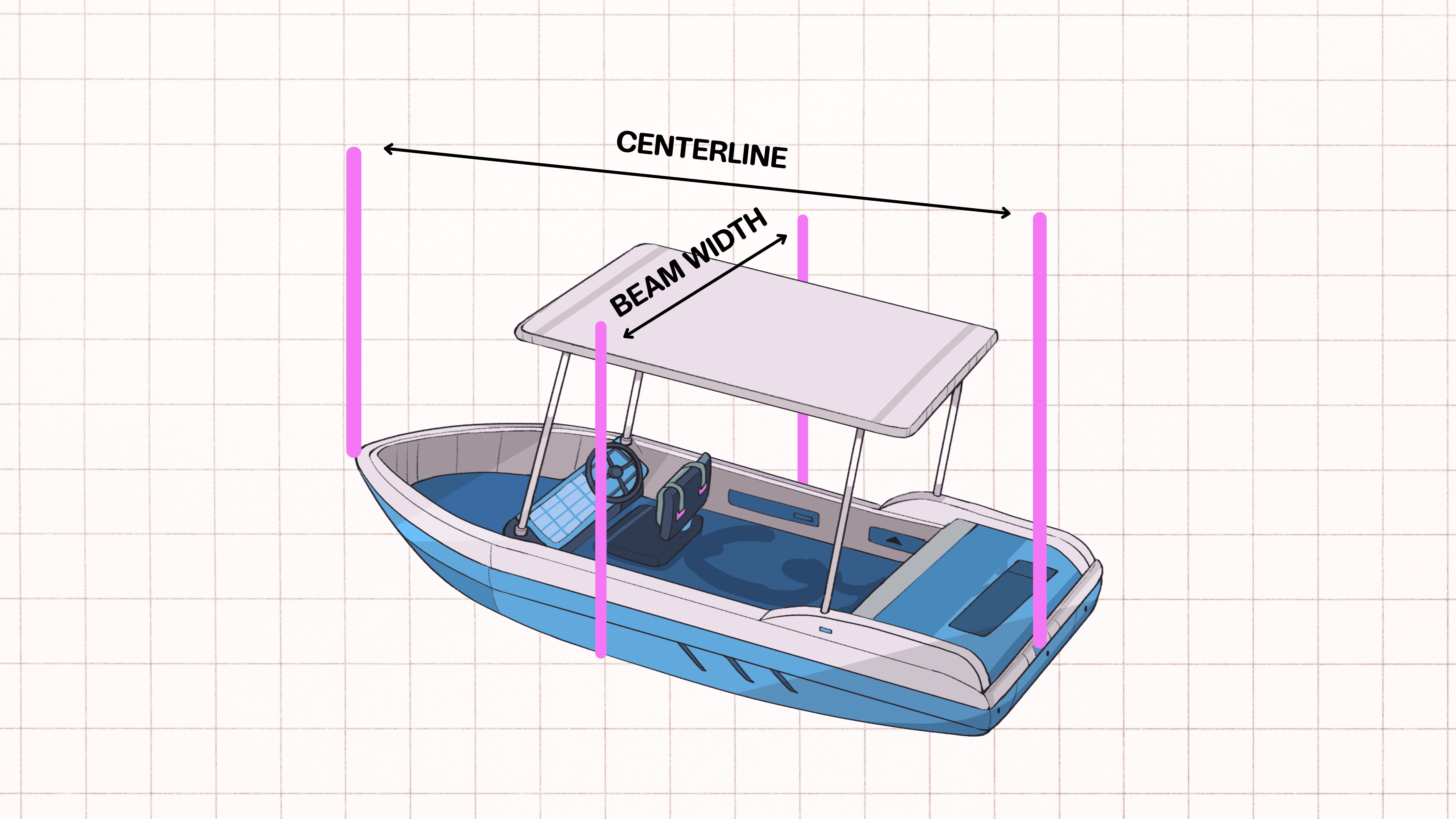
In plain English, the beam is the width of a boat at its widest point.
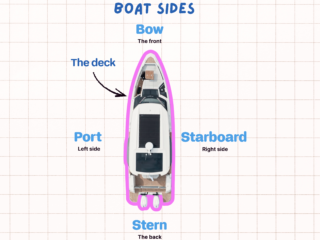
It is not the width at the bow (front), nor at the stern (back). It is the measurement taken at the broadest part of the ship’s hull. Imagine drawing a line from the port side (left) to the starboard side (right) exactly where the boat is “fattest.” That line is your beam.
Why Does the Beam Matter? (It’s Not Just a Number)
You might be thinking, “Why do I care how wide the boat is?” Well, the beam dictates three major things: Stability, Space, and Access.
1. Stability vs. Speed
This is the golden rule of naval architecture:
- A wider beam generally equals more stability. Think of a catamaran or a pontoon boat. They are wide and flat, making them incredibly stable. They don’t rock much when you walk around. This is perfect for family holidays, fishing, or relaxing at anchor.
- A narrower beam generally equals more speed. Think of a racing yacht or a canoe. They cut through the water with less resistance (drag), but they are more likely to tip or heel over.
2. Space Onboard
This one is simple logic. A boat with a generous beam offers more living space. If you are renting a sailboat for a week with 8 friends, a wide beam means larger cabins, a wider salon, and a more comfortable cockpit for dining under the stars.
3. Access and Cost
The beam decides where you can go.
- Marinas: Most berths are sold based on size. A wider boat (especially catamarans) might pay a surcharge because they take up two spots.
- Locks and Canals: If you plan to navigate narrow waterways like the Canal du Midi in France or the canals of Venice, the beam is a “pass or fail” number. If your beam is wider than the lock gates, you aren’t getting through!
The “Beam to Length” Ratio
Designers use a ratio to determine the character of a boat.
- Formula: Length Overall (LOA) / Beam.
Historically, the standard ratio for sailboats was around 3:1 (the length is three times the beam). However, modern cruising sailboats are getting wider (closer to 2.5:1) to offer more luxury and space inside. Powerboats can vary wildly depending on whether they are designed for ocean cruising (deep V-hull, moderate beam) or lake lounging (wide beam).
FAQ
How do I measure the beam of my boat?
To measure the beam accurately, find the widest part of the boat. Measure the straight-line distance from the outside edge of the hull on one side (gunwale) to the outside edge on the other. Do not follow the curve of the deck; the tape measure must remain straight and taut.
Is a wider beam always better?
Not necessarily. It depends on what you want to do.
- Yes, if you want living space and stability at anchor (great for holidays).
- No, if you want high-performance sailing or need to fit into a narrow marina slip. A very wide boat can also be uncomfortable in choppy seas as it tends to slam into waves rather than cutting through them.
What is the difference between Beam and LOA?
- LOA (Length Overall): Measures the boat from the tip of the bow to the end of the stern. It tells you how long the boat is.
- Beam: Measures the boat from side to side at the widest point. It tells you how wide the boat is.
Does the beam affect the rental price?
It can! Larger, wider boats (like catamarans) are often more expensive to rent than monohulls of the same length because they offer significantly more living space and amenities. However, you can split that cost among more people since they often have more cabins!
Why are catamarans considered to have a huge beam?
A catamaran has two hulls. Its “beam” is measured from the outer edge of the port hull to the outer edge of the starboard hull. This is why a 40-foot catamaran feels like a floating apartment compared to a 40-foot sailboat.