If you’ve ever heard someone shout “Fenders on port!” or “Look out to starboard!” and felt a bit lost, you’re not alone. On land we say “left” and “right” without thinking. On a boat, though, those words can quickly become confusing. That’s why sailors use port and starboard instead.
In this guide, we’ll explain what port and starboard mean, why they’re so important at sea, how to remember which is which, and how they’re used in real situations, especially if you’re planning to rent a boat.
What do port and starboard mean?
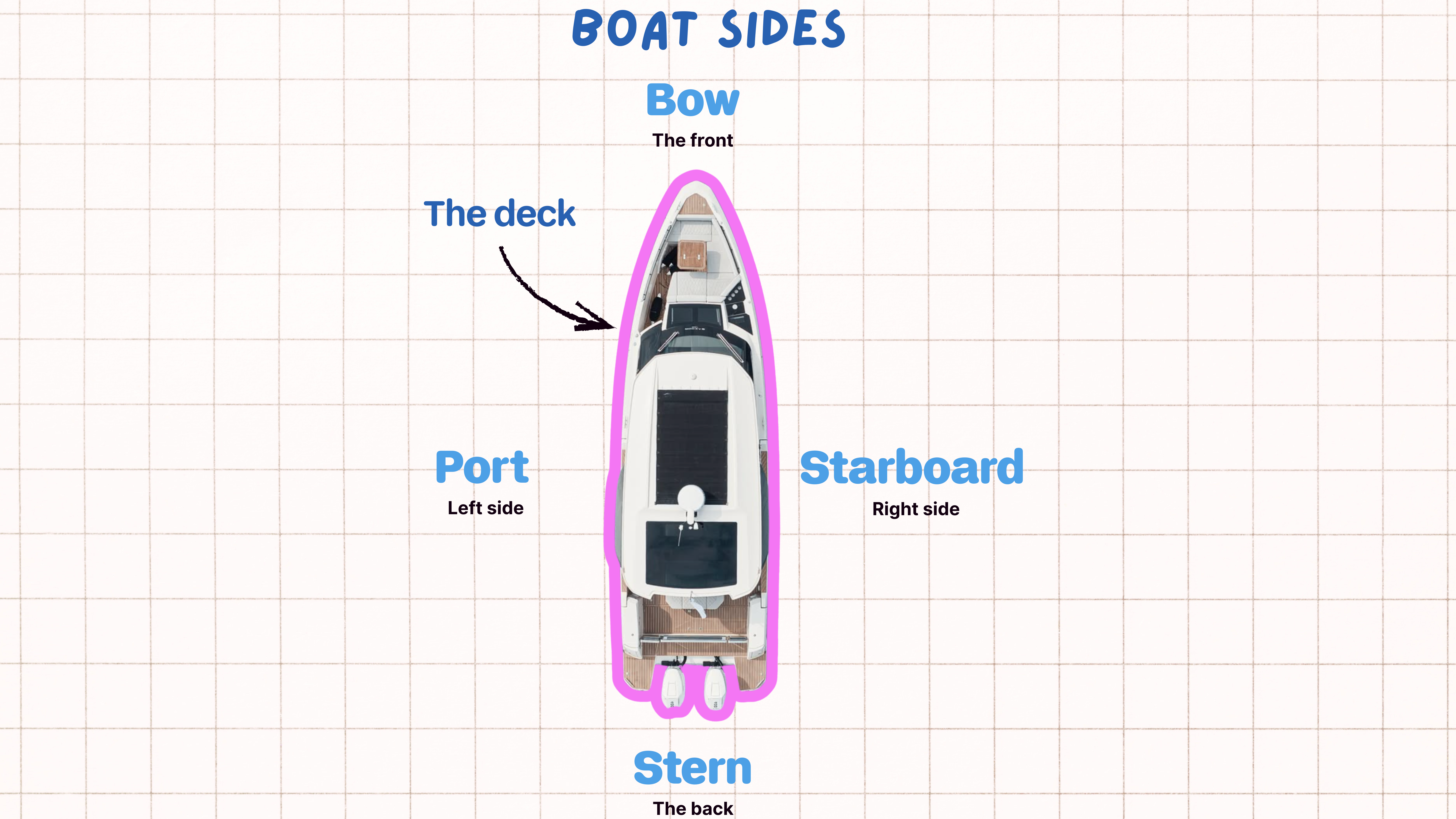
On any boat, port and starboard refer to the two sides of the hull:
- Port is the left-hand side of the boat.
- Starboard is the right-hand side of the boat.
This only makes sense if you imagine yourself facing the bow, i.e. looking toward the front of the boat. Stand on deck, look forward: the side on your left is the port side, the side on your right is the starboard side.
The key idea is that these words describe the boat’s left and right, not yours. Even if you turn around, walk backwards or face the stern, port and starboard do not change. That’s exactly what makes them so useful.
Why don’t we just say left and right?
On a small static object, “left” and “right” are simple. On a moving boat full of people looking in different directions, they’re not.
Imagine the skipper is facing forward at the helm, one crewmember is looking aft at the wake, and another is on the foredeck facing sideways. If someone shouts “Look to your left!”, each person could look somewhere completely different. In a busy harbour or near other boats, that can be dangerous.
Port and starboard solve this problem. They are:
- Fixed to the boat, not to each person.
- Understood internationally, regardless of language.
- Used in rules and charts, including collision regulations and light signals.
Because everybody on board shares the same reference, communication becomes much clearer, especially in manoeuvres or emergencies.
How to remember port and starboard?
If you’re not used to boats, it’s very normal to mix them up at first. A few simple tricks help lock them in your memory.
One of the easiest is to look at the words themselves: “port” and “left” both have four letters. So port = left side. Once that’s in your head, starboard is automatically the right.
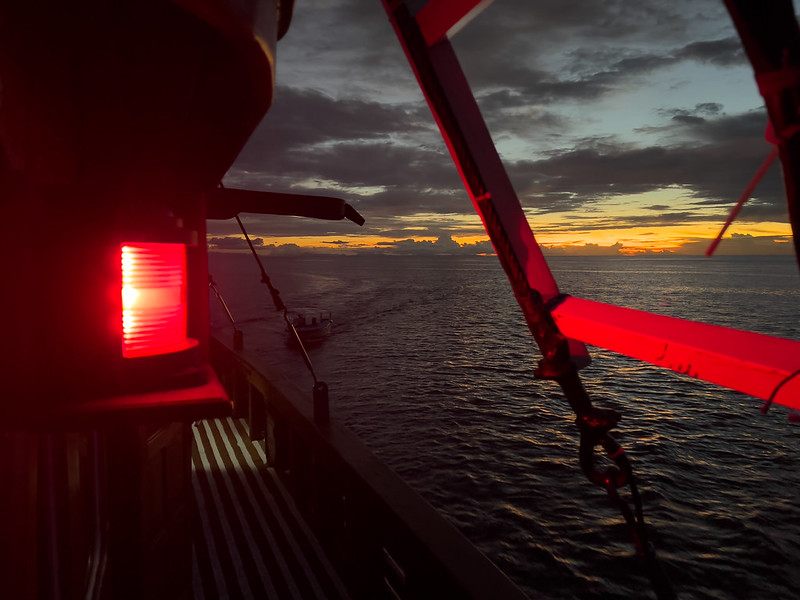
Another classic way is to think about colours. At night, boats display navigation lights: red on port, green on starboard. Many people remember this by thinking of red port wine : port is red, therefore port is the left-hand side. By elimination, green is the right-hand side, so that’s starboard.
Pick the mnemonic that feels the most natural and repeat it a few times in your head. After a couple of days on the water, you’ll suddenly realise you’re using “port” and “starboard” without needing to think.
How port and starboard are used on board?
These two words might sound basic, but they appear everywhere in day-to-day boating.
Navigation lights and avoiding collisions
When you look at a boat at night, you’ll see a red light on one side and a green light on the other. The red light is the port side, the green light is the starboard side.
This tells you two things at a glance:
- Which way the other boat is heading.
- Which side you are seeing – their left/port side or right/starboard side.
From this, experienced skippers can quickly understand who should give way and how to pass safely.
Docking, fenders and lines
Port and starboard are also used constantly when manoeuvring in harbours and marinas. Before entering a port, the skipper can, for example, say: “We’ll come alongside on the starboard side.”
Everyone in the crew then knows where to place fenders, prepare mooring lines, and where to stand ready to step ashore. The same language works whether you are in a small marina in the Balearic Islands or a busy port in Croatia, and it avoids the chaos of “your left”, “no, my left!”.
Life on deck and below
Even away from manoeuvres, you’ll often hear instructions built around port and starboard such as:
- Lifejackets stored in the starboard locker.
- The fuel shut-off under the port aft bunk.
- The dinghy tied to the port stern cleat.
Once you understand which side is which, the whole boat suddenly feels easier to read. You know where things are and can react more quickly if the skipper asks for help.
Where do the words port and starboard come from?
These aren’t random nautical inventions; they come from the way boats used to be built.
In the past, before boats had the central rudders we know today, many vessels were steered with a large oar fixed on the right-hand side at the back. That was the “steer board” side, which eventually became starboard.
The left-hand side was originally called “larboard”, but that sounded dangerously close to starboard, especially shouted in bad weather. To avoid confusion, sailors gradually adopted the word “port” instead, because that was the side usually turned toward the harbour or the quay when docking. The names stuck and are now used worldwide.
FAQ
Is port left or right?
Port is the left-hand side of the boat when you’re facing forward toward the bow. Starboard is the right.
Do port and starboard change if I turn around?
No. Port and starboard are always the same physical sides of the boat. They do not depend on how you stand or which way you’re facing.
Which colour is port and which is starboard?
Port is associated with red, starboard with green. You’ll see these colours on navigation lights and sometimes on deck markings or chart symbols.
Why are these words important for safety?
Because they remove ambiguity. In a tight harbour, at night or in rough weather, everyone must understand instructions instantly. Port and starboard give the crew a shared reference, which reduces the risk of mistakes.